
Jewelry Packaging Boxes
Jewelry packaging must isolate metal and stone surfaces from hard board while presenting small, high-value products in a controlled and easy-to-remove position.
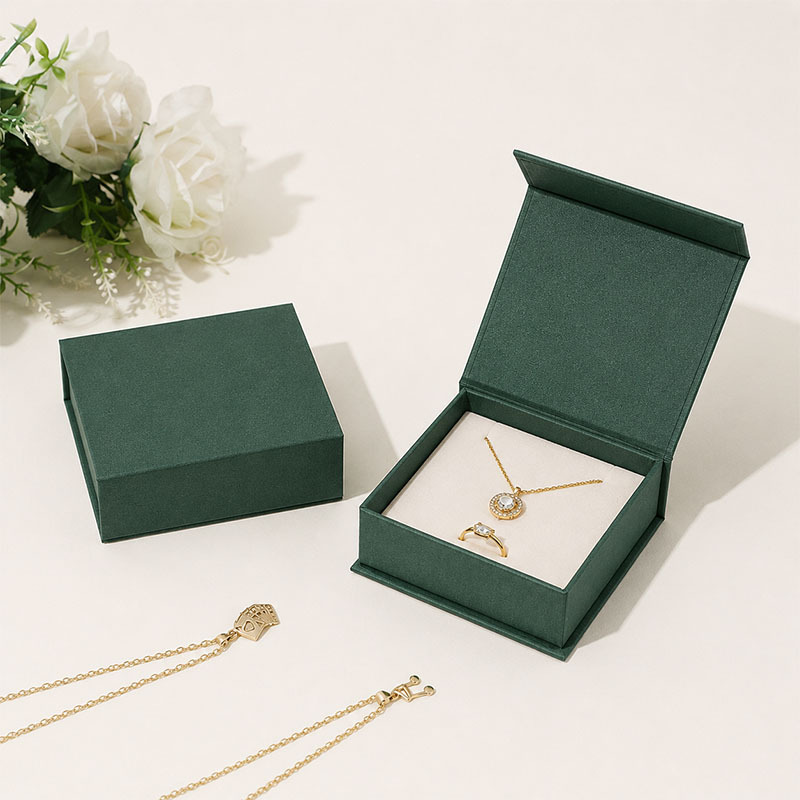
Control Movement Without Hiding the Product
Jewelry packaging must protect delicate surfaces and small components while keeping the product easy to present and remove. Insert material, cutout position, pull points and interior color should be reviewed with the actual jewelry layout.
Jewelry Packaging Boxes Product Examples
Browse factory-made structures that can be adjusted for product dimensions, protection, opening experience, printing and order requirements.

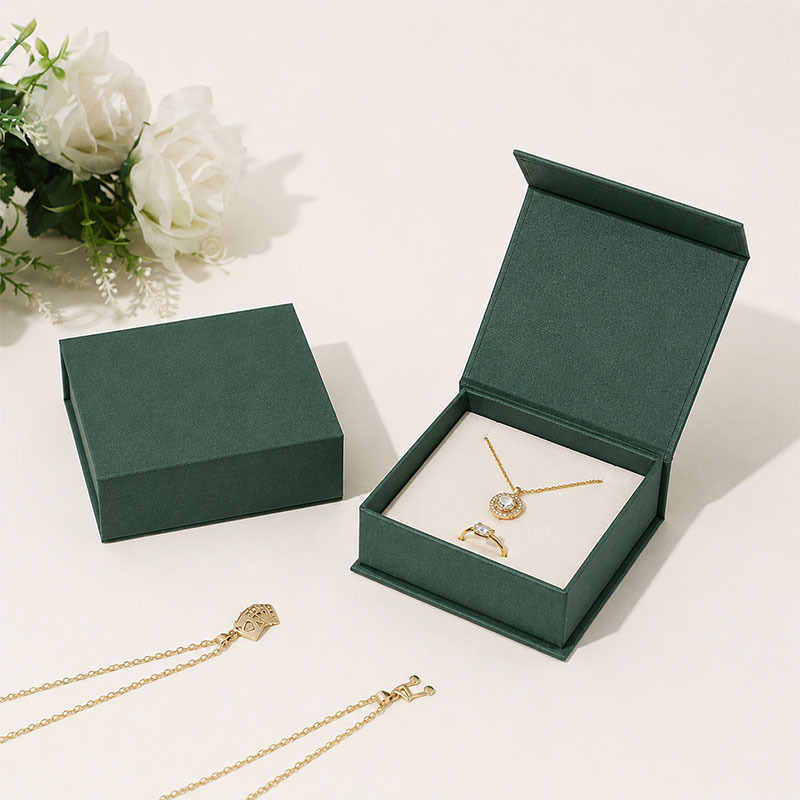
Green Hinged Jewelry Gift Box
Compact green hinged jewelry box with a fitted presentation insert for necklaces, earrings and small accessories.
View details →
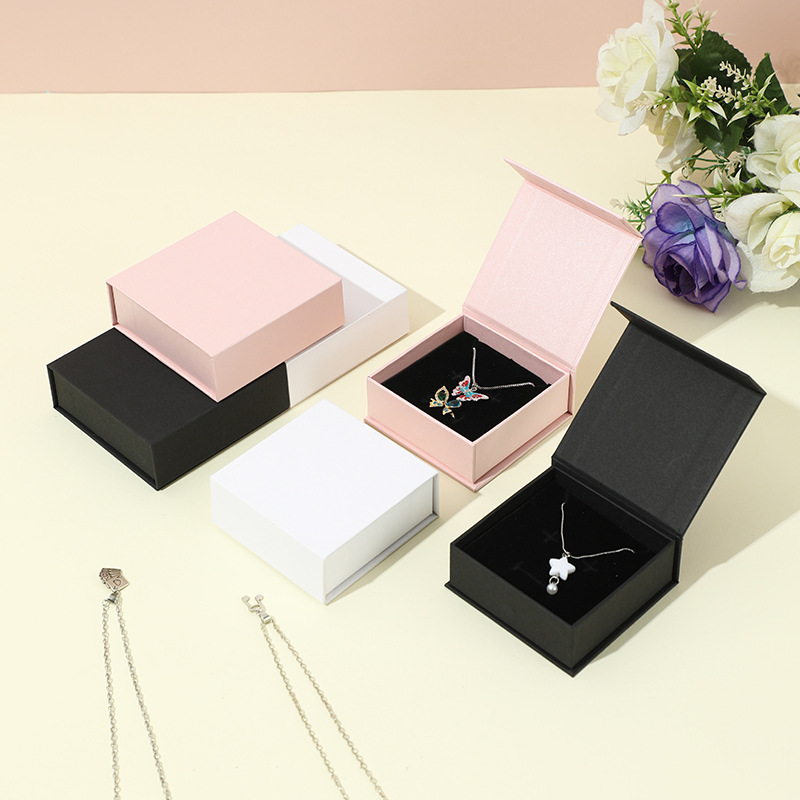
Pink and Black Hinged Jewelry Gift Box
Hinged rigid jewelry presentation box offered in pink, black and white with a soft fitted insert.
View details →
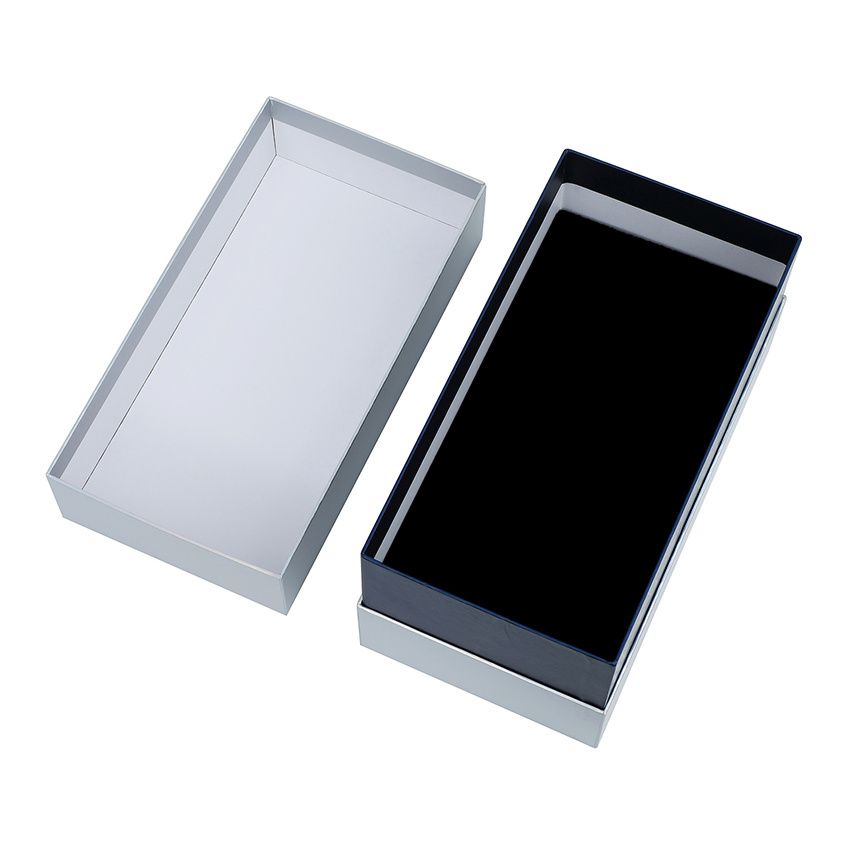
Long Shoulder Gift Box with a Black Interior
An elongated lift-off-lid box with a raised inner frame and contrasting black interior.
View details →
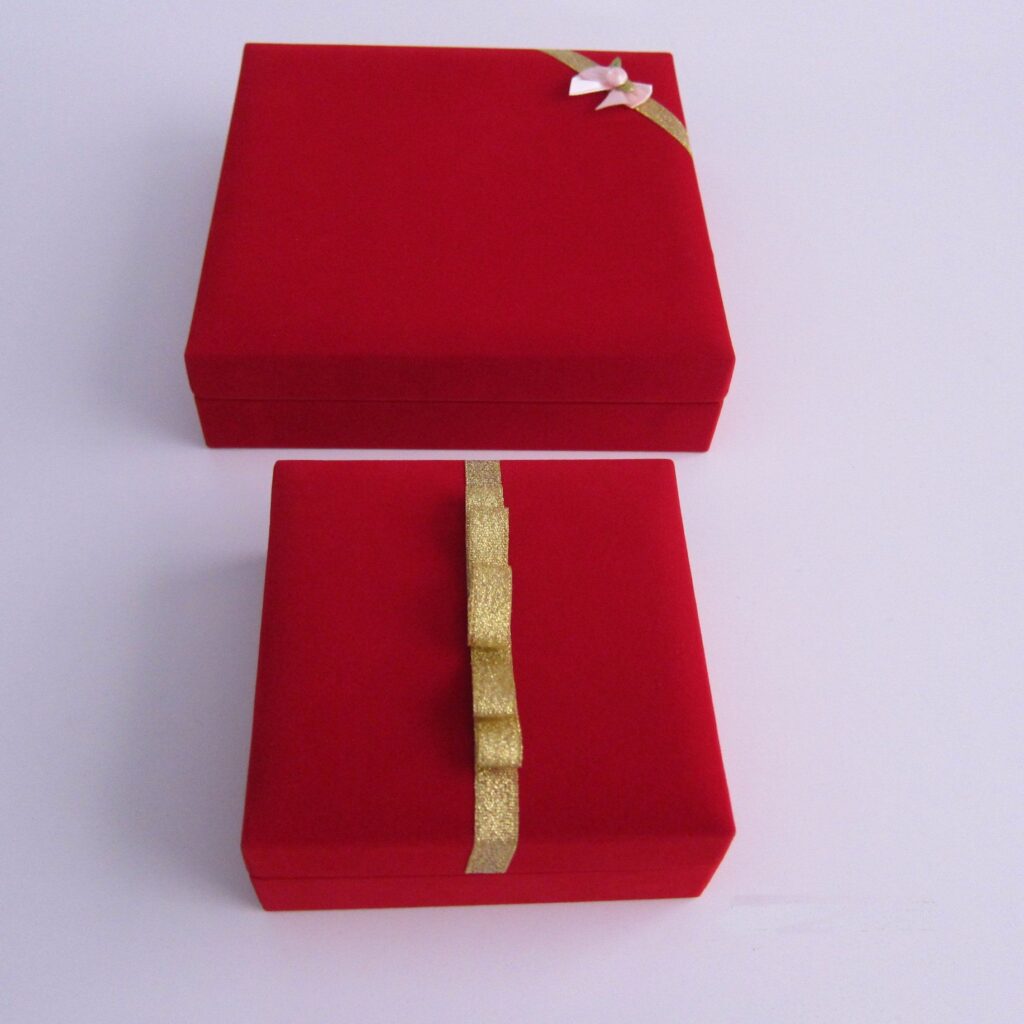
Red Fabric-Covered Jewelry Gift Box
A fabric-covered presentation box with a soft red surface and ribbon decoration for jewelry gifting.
View details →
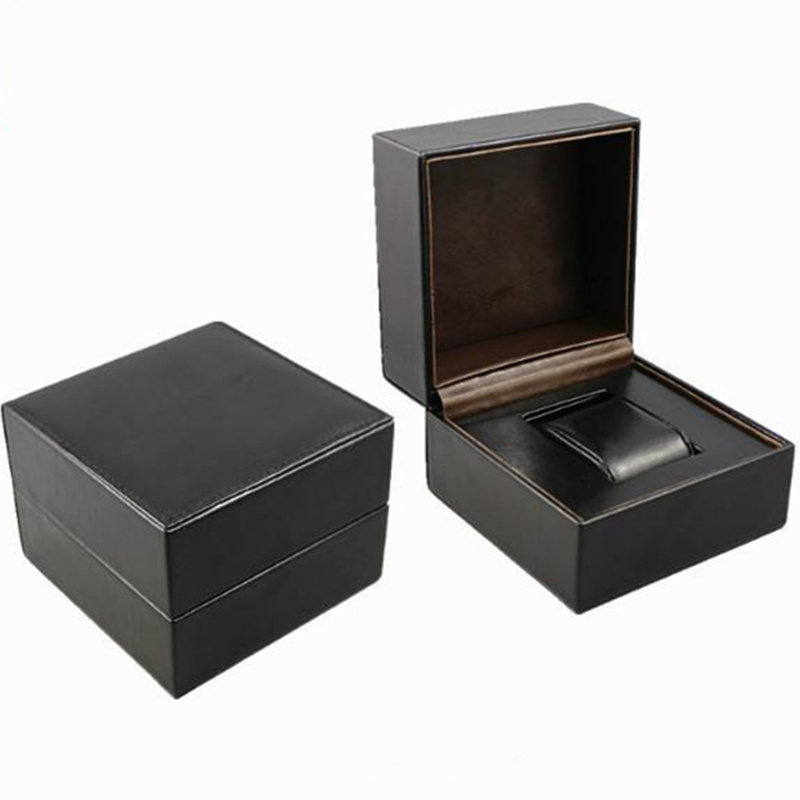
Black Hinged Watch Presentation Box
A black square presentation box shown open and closed, with a cushion for holding a watch inside.
View details →
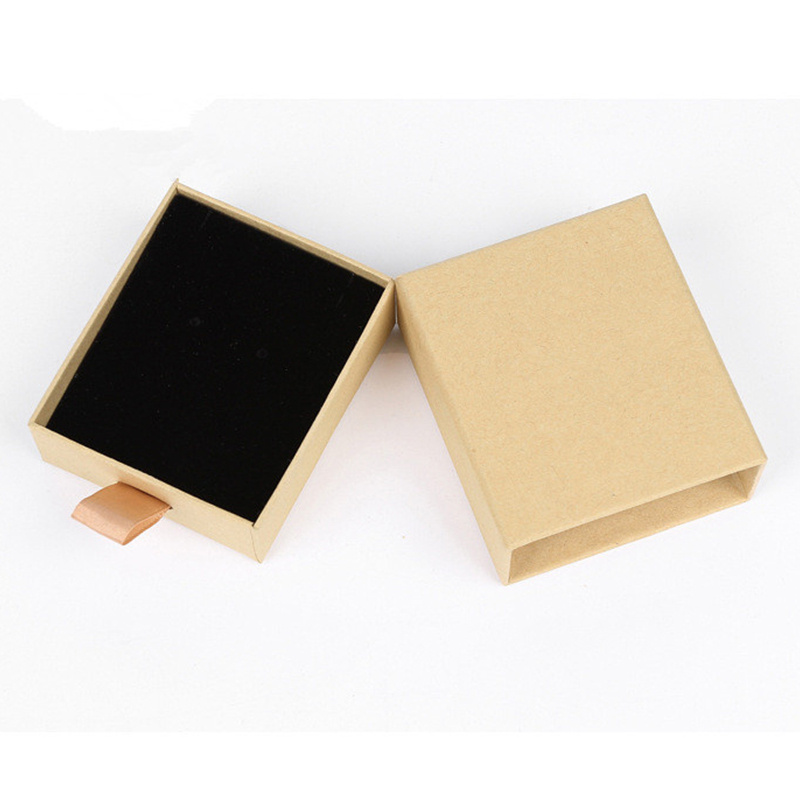
Champagne Drawer Gift Box with Black Lining
A champagne-colored sleeve and pull-out tray contrast with black interior lining for small accessories or gift items.
View details →
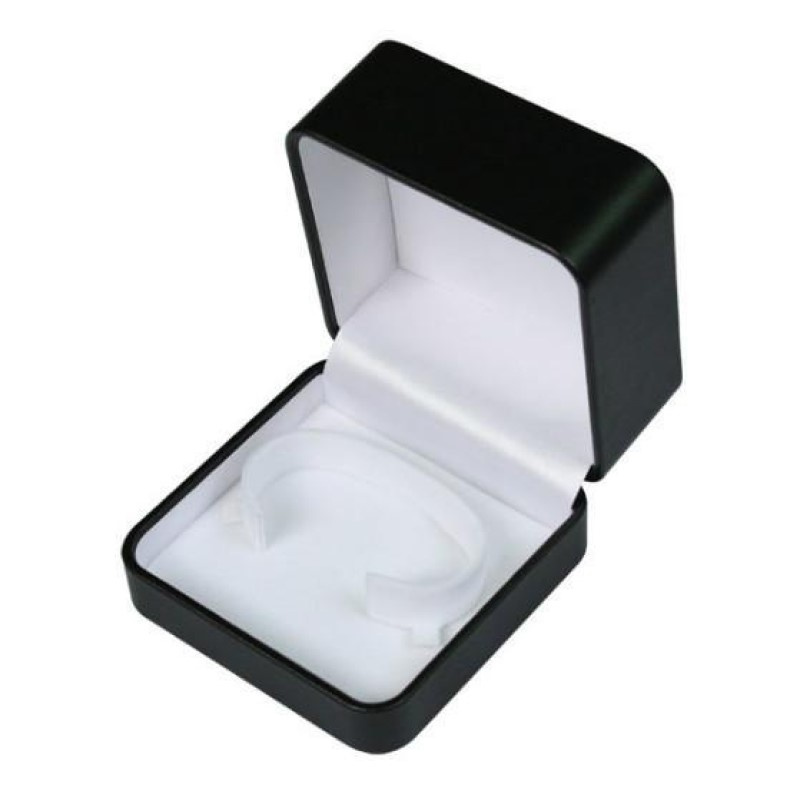
Black Jewelry Box with a Shaped White Insert
A compact hinged jewelry box with a contrasting white interior and a shaped display support.
View details →
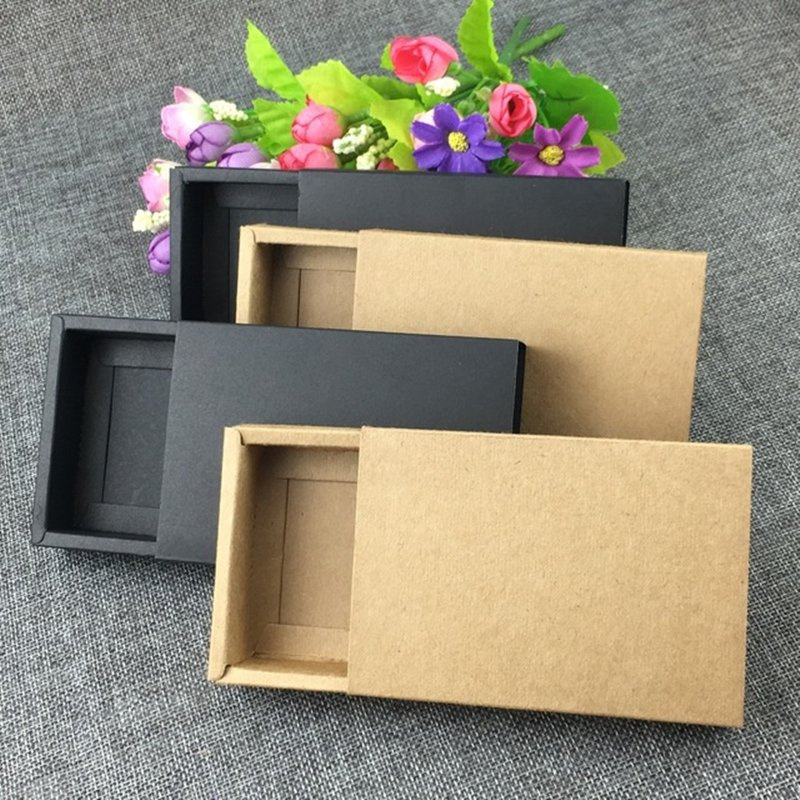
Kraft and Black Sliding Drawer Gift Boxes
A sliding sleeve-and-tray box family with plain kraft-colored or black surfaces.
View details →
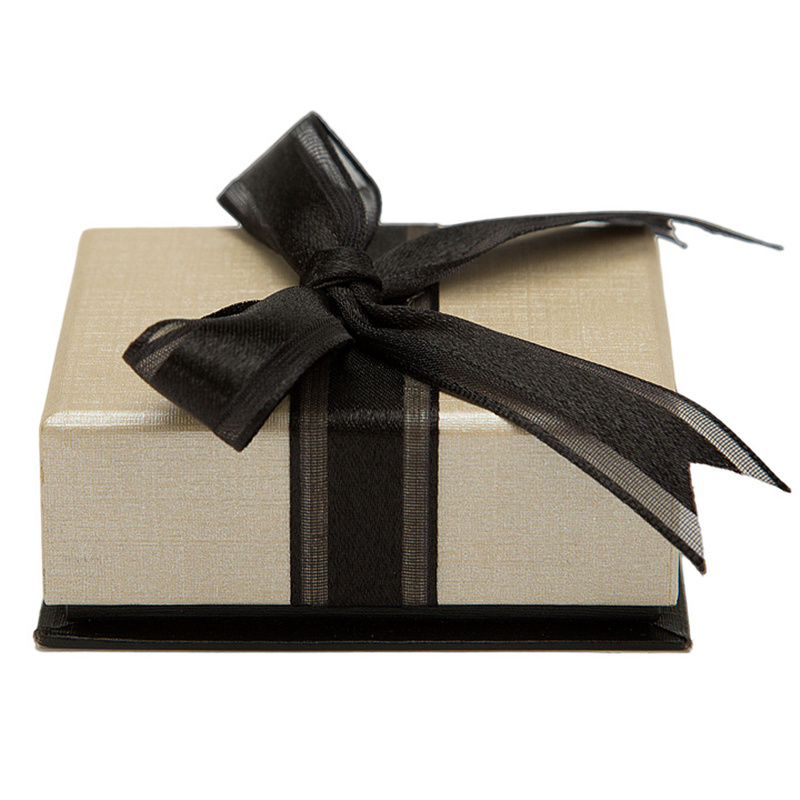
Textured Gift Box with a Black Ribbon Bow
A compact textured presentation box with a black ribbon bow and contrasting base edge.
View details →Recommended Box Structures

Small lid and base boxes, magnetic book-style boxes and drawers all work when the insert and opening direction are planned around the jewelry type.
Small lid and base box
A classic presentation format for rings, earrings and compact sets with a fitted soft insert.
Magnetic book-style box
A stronger reveal for higher-value sets when magnet position and hinge tension are controlled.
Drawer jewelry box
A sleeve-and-tray structure for necklaces, accessories and layered compartments.
Materials, Inserts and Finishing
Flocked EVA, flocked foam, PU-wrapped pads and satin linings can secure rings, necklaces and sets without creating pressure marks or loose movement. Textured paper with restrained foil or light embossing creates a premium result that is easier to reproduce than stacking several fragile finishes.
Paper & Board
Greyboard thickness, specialty paper, coated paper and responsible paper options.
Custom Inserts
Paperboard, molded pulp, EVA, foam and fabric-covered insert systems.
Foil Stamping
Gold, silver and custom-color foil for logos and fine details.
Embossing / Debossing
Raised or recessed brand details for a tactile premium finish.
Spot UV
Gloss contrast used selectively over logos, patterns or product names.
Logo Printing
Pantone, CMYK and specialty printing aligned to approved artwork.
What to Confirm Before Sampling
These decisions shape the structure, insert, physical sample and quotation.
Surface isolation
Keep metal and stone away from hard board, rough insert edges and loose accessories.
Removal experience
Hold the product securely without making it difficult for the customer to lift out.
Clean handling
Approve flocking, lint control, foil coverage and individual protective packing.
From Product Brief to Mass Production
Review the product and risk first, approve the physical structure and finishes, then lock the production specification and inspection references.
- 01
Requirement Review
Confirm product size, order quantity, structure, market and target budget.
- 02
Structure & Artwork
Develop the dieline, insert fit, materials and print specifications.
- 03
Sample Approval
Approve structure, color, finish and packing method before mass production.
- 04
Mass Production
Printing, surface finishing, die cutting, assembly and line inspection.
- 05
Quality Check
Check dimensions, appearance, function, insert fit and approved-sample consistency.
- 06
Export Packing
Pack for shipment and coordinate express, air or sea delivery worldwide.
Quality Checks for Repeatable Delivery
Inspect lint, insert edges, product removal, closure feel, foil coverage and surface protection before each box is bagged and packed.
First-article approval
Stop setup errors before volume production.
In-process inspection
Catch drift in mounting, foil, glue, fit and alignment.
Final inspection
Check appearance, opening performance, accessories and packing.
FAQ About Jewelry Packaging Boxes
Which inserts and opening styles work best for jewelry?+
Flocked EVA, flocked foam, PU-wrapped pads and satin linings are common. Small lid and base boxes, magnetic book-style boxes and drawers can all work, provided each piece is fixed without being difficult to remove and every metal or stone surface is isolated from hard board.
Which colors, papers and opening styles suit different industries?+
Beauty and fragrance often favor low-saturation colors, tactile papers and magnetic openings. Jewelry uses restrained foil and soft linings. Tea and food suit textured papers and lid and base or tube formats. Wine and corporate gifts typically use deeper colors, stronger board and simpler, more formal finishes.
Should an insert fit tightly or leave movement?+
Fragile glass, wine and ceramic products need a secure fit with no damaging movement, but still need a finger-access point. Soft goods can use a looser fit. Pumps, caps and moving closures always need relief so the closed box cannot press or activate them.
Which details improve the unboxing experience most?+
A clean flocked or fabric-faced insert, easy finger access, correct product depth, a clear hero-product position and a well-tuned magnetic close deliver the most value. A card pocket and fully finished inner lid help. Extra hidden mechanisms are only useful when they remain reliable at scale.
How are logo position, direction, color and finish approved?+
We issue a dimensioned PDF proof, check each finish separation and compare physical color or foil references. A real process sample is used where appearance matters, because a screen cannot define print or foil acceptance. Orientation is checked on every face, including the inside lid and base.
How is insert performance checked?+
The real product is fitted, shaken and removed several times. It should not move or strike the box, must remain easy to lift, and cannot be pressed by the closed lid. Cavities and flocked edges are checked for burrs or debris that could scratch the product.
How are different surface finishes protected after production?+
Laminated boxes are individually bagged and separated. Foil, UV and embossed surfaces use soft PE bags and neutral, powder-free interleaving. Flocked surfaces need lint-free soft protection, and matte or gloss faces must be kept free of dust or grit. Corrugated dividers separate layers inside the export carton.
PRODUCTION PLANNING
Capacity Follows the Selected Box Structure
Daily output depends on the box structure and size. Inserts, finishes and packing methods also affect capacity. Use the 8-hour-shift figures for early planning, then confirm the schedule after sample approval.
Next Step
Plan Your Jewelry Packaging Boxes
Send the product size, weight and order quantity. Also include your artwork status and required delivery date. Our factory team will recommend a box structure, insert and sampling plan.
